
UNEP: World set to cross 1.5°C, focus shifts to limiting peak warming and overshoot duration|Aquasky
A temporary exceedance of the 1.5°C threshold—known as overshoot—is now considered almost inevitable in the coming years. However, according to the Limiting Overshoot report published on 2 September 2026 by the United Nations Environment Programme (UNEP), crossing this line does not mean all climate efforts have failed. The focus is now on limiting peak warming, shortening the duration of the overshoot, and creating conditions for global temperatures to eventually decline. Still, UNEP warns that a drop in temperature will not reverse all climate impacts; some damage to human communities and ecosystems could be long-lasting.
1. The gap between current policies and the 1.5°C target
To understand the scale of the challenge, it is necessary to distinguish current policies from ambitious climate action scenarios. According to data from UNEP's Emissions Gap Report 2025, maintaining current policies is projected to result in global warming of around 2.8°C above pre-industrial levels this century. Even with full implementation of Nationally Determined Contributions (NDCs), warming is still projected to reach around 2.3–2.5°C.
These figures show that existing climate commitments are not yet enough to align the global warming trajectory with the temperature goals of the Paris Agreement. Looking specifically at the overshoot scenario, the 2026 Limiting Overshoot report indicates that under the most optimistic scenario considered, global temperatures could peak at around 1.8°C before declining. Achieving this pathway requires immediate and sustained reductions in greenhouse gas emissions on the way to net zero. This must be followed by long-term net-negative emissions, where carbon dioxide removal acts as part of the solution. However, UNEP stresses that removing CO₂ serves only as a supplement and cannot replace deep and sustained emissions cuts.

Figure 1. The 1.5°C Overshoot Pathway: From Peak Warming to Temperature Decline. Source: UNEP, Limiting Overshoot (2026). Note: "Peak" in the chart refers to peak warming, and "Exceedance" represents the climate overshoot period.
2. Real-world climate data and the risks of marginal warming
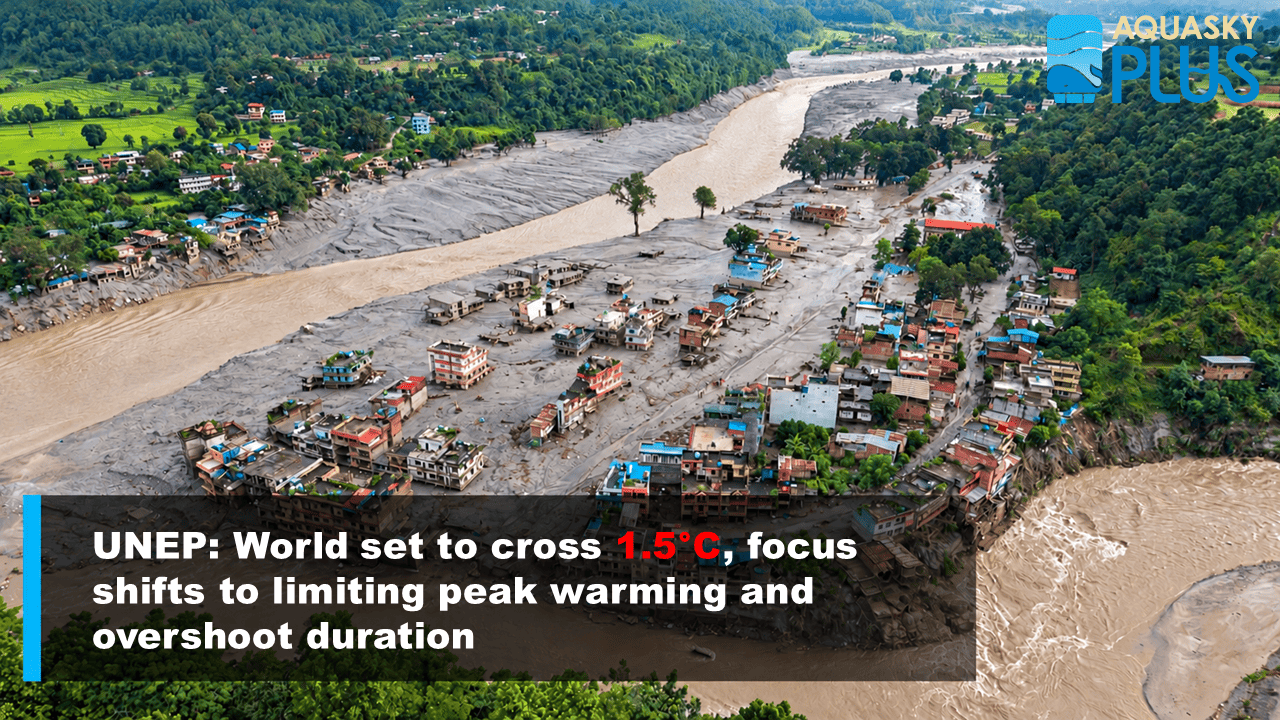
Shortly before UNEP released its latest report, the Trishuli River area in Rasuwa, Nepal, was hit by severe flash floods and mudslides on August 26, 2026, highlighting the real-world risks that extreme disasters pose to communities and infrastructure.

Picture 1. Flash floods and a mudslide damaged buildings near the Trishuli River in Rasuwa, Nepal, on August 30, 2026. Photo: REUTERS/Stringer — Angad Dhakal.
Actual climate conditions further underscore the urgency of these predictive models. According to the State of the Global Climate 2025 report published by the World Meteorological Organization (WMO) on 23 March 2026, the period from 2015 to 2025 was the warmest 11 years on record. Notably, the global average temperature in 2025 was already about 1.43°C above the 1850–1900 average.
Once temperatures exceed 1.5°C, every fraction of a degree of additional warming amplifies climate impacts and risks. The higher the peak warming and the longer the duration of the overshoot, the greater the risks to human societies, economies, and ecosystems. This also increases the likelihood of crossing tipping points that could lead to irreversible changes.
3. Focus shifts to limiting the extent of overshoot
Responding to the latest climate assessment on 2 September 2026, UN Secretary-General António Guterres emphasized that severe heatwaves, wildfires, and deadly floods during the summer were clear warnings of the potential risks ahead. He called for global action to keep the extent and duration of warming above 1.5°C as small and short as possible.
UNEP stressed that overshooting the 1.5°C threshold does not mean abandoning the temperature goals of the Paris Agreement. Instead, the priority is to limit peak warming, shorten the overshoot period, and create the conditions for global temperatures to decline. This requires immediate and sustained reductions in greenhouse gas emissions, alongside stronger adaptation measures to reduce the vulnerability of communities and economies to climate impacts. The higher the warming peak and the longer the overshoot lasts, the greater the risks of climate impacts and irreversible losses, making delayed action more difficult and costly to address.
4. Action pathways during the overshoot period
Core actions now involve accelerating the transition away from fossil fuels, scaling up renewable energy, and deeply cutting greenhouse gas emissions. At the same time, communities must strengthen their ability to adapt to increasingly severe climate impacts. The ultimate goal is to keep peak warming as low as possible, shorten the time the world remains above the 1.5°C threshold, and reduce the risks of crossing irreversible tipping points and reaching adaptation limits.
5. Climate Adaptation and Energy Efficiency: Starting with Water Systems and Infrastructure
As energy efficiency and infrastructure stability become increasingly important, system-wide energy-saving solutions and pressure control equipment play a key role in carbon reduction and climate adaptation across water pumping, heating and cooling, water heating, and water treatment systems.
AQUASKY is committed to providing high-quality diaphragm pressure tank solutions for residential, commercial, and industrial markets worldwide, helping customers respond to climate change through practical applications:
In the face of the 1.5°C climate overshoot challenge, every unit of electricity saved and every measure taken to protect water resources matters. AQUASKY will continue to work with global partners through efficient, durable pressure tank technology, contributing to the shared goal of net-zero emissions and a sustainable future.
Key Terms at a Glance
Read More