
EU Carbon Border Adjustment Mechanism (CBAM) |Aquasky
* What is the Carbon Border Adjustment Mechanism (CBAM)?
The CBAM is a system that EU uses to equalize carbon emission costs for products, whether they're made inside or outside the EU. It works by charging a fee on products from countries that don't have the same carbon emission rules as the EU.
Upon entry into the EU, products must cover the corresponding carbon emission costs. This ensuring that imported goods have the same carbon cost as local EU products. The goal is to encourage non-EU countries to reduce their emissions and prevent businesses from moving production to countries with looser environmental rules, a problem known as "carbon leakage".

* Why Do We Need CBAM?
The EU aims to reduce emissions by at least 55% by 2030 and achieve climate neutrality by 2050. To reach these ambitious goals, the EU has implemented various climate change actions, including the EU Emission Trading System (ETS). But the ETS only works in the EU, which leads to 'carbon leakage'. This happens when it's cheaper to make goods in countries with fewer environmental regulation, or when EU companies relocate their production to these places. The CBAM was established to address ETS's shortcomings by ensuring that imported goods also pay for their carbon emissions, similar to goods made in the EU. Thus supporting global carbon reduction goals without harming the EU's economy.
* What is the Scope of the CBAM?
The CBAM applies to goods produced in non-EU countries, including:
• Goods wholly produced outside the EU.
• Goods that underwent their last substantial production phase outside the EU (in cases production involves multiple countries).
From 1 Oct. 2023 to 31 Dec. 2025, there will be a transition period, CBAM obligations will be limited to reporting and will apply to goods with high chances of carbon leakage:
• Iron and steel (A comprehensive range of iron and steel products (except certain ferro-alloys and scrap), and downstream products like screws, bolts, nuts, rivets, cotters, cotter pins, washers and similar articles)
• Aluminum (Aluminum structures and parts, certain aluminum reservoirs, tanks and containers, non-insulated stranded wire, cables, plaited bands and other aluminum articles)
• Cement
• Fertilizers
• Electrical energy
• Hydrogen
Starting in 2026, the transition period will end, and importers will begin making payments. The European Commission will evaluate other high-risk products to be added to the CBAM, potentially encompassing organic chemicals, polymers, and downstream goods. The Commission will also consider including indirect emissions to the requirements.
By around 2030-2032, the mechanism is expected to be fully implemented, encompassing all goods covered by the ETS.
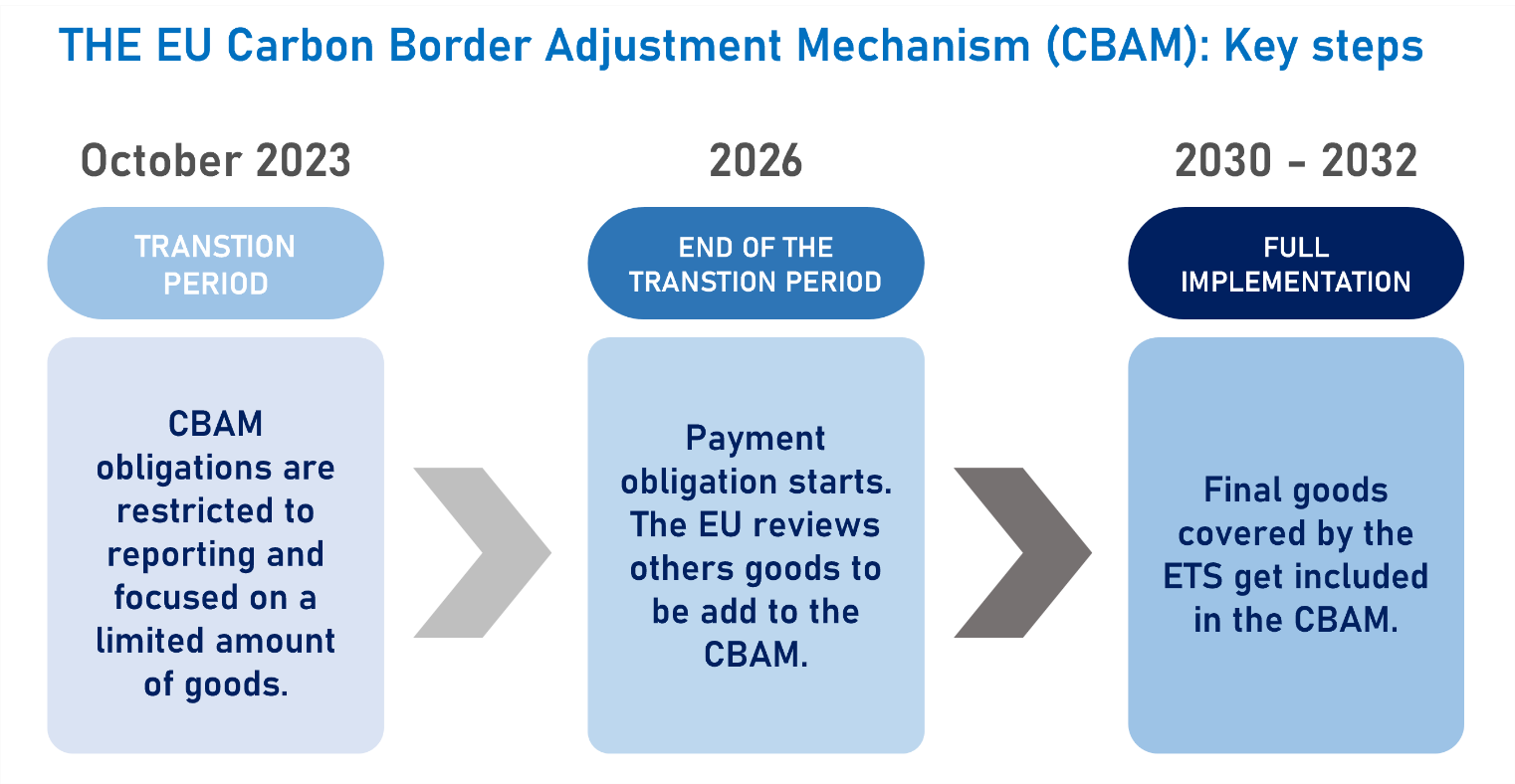
* Implementation Timeline of the CBAM
• Transition Phase (1 October 2023 to 31 December 2025): During this period, importers must report emissions quarterly, but purchasing CBAM certificates is optional. They need to declare both direct and indirect emissions of imported goods and any carbon price paid in the country of origin.
• Important Date (31 December 2024): By this date, importers must have "authorized CBAM declarant" status to qualify for importing goods into the EU.
* How CBAM will work
Under new CBAM rules, importers are required to report total verified greenhouse gas (GHG) emissions of imported goods annually. After the transition period, ending in 2025, CBAM charges will gradually increase until 2034. Carbon cost paid at origin can be deducted from the CBAM charges with proper evidence.
Importers will use CBAM certificates, priced at the EU ETS allowances' weekly average, to cover these charges. Importers must ensure CBAM certificates covering at least 80% of the year's imported emissions each quarter and surrender CBAM certificates equal to the annual total imported emissions, along with an annual CBAM declaration.
* Immediate steps to take
With the CBAM transition phase already started on 1 October 2023, immediate preparation for the new quarterly reporting is essential. Both EU and non-EU businesses must understand CBAM requirements.
Steps include:
• Appoint a CBAM Manager: Assign a responsible individual to oversee compliance with CBAM regulations.
• Identifying CBAM-covered EU imports: Check which EU imports must comply with CBAM guidelines.
• Prepare for Reporting: reporting on carbon emissions and carbon price at the location of manufacturing.
Furthermore, it's important for businesses affected by CBAM to assess their supply chains, understand the potential financial impacts, and explore strategies for minimizing these impacts, such as sourcing from suppliers with lower carbon footprints or investing in more efficient, less carbon-intensive production processes.