
U.S. Climate Policy - Clean Competition Act (CCA)
In an era where climate change poses one of the greatest challenges to our global community, the U.S. Senate proposed the Clean Competition Act (CCA) in June 2022. Aimed at imposing a carbon border adjustment on energy-intensive imports, this act has recently completed its second reading. If passed, the carbon tariff, effective from 2024, will impact products manufactured both in the U.S. and U.S. importers.
_aquasky.png)
WHAT IS THE CCA ?
The Clean Competition Act (CCA), introduced in 2022 by Senator Sheldon Whitehouse, aims to implement a carbon border adjustment mechanism. The Act proposes a mechanism that imposes a carbon intensity charge on both domestically produced and imported goods. Its dual objectives are to incentivize the reduction of greenhouse gas emissions and to ensure fair competition for U.S. industries, particularly against foreign manufacturers not subject to stringent environmental regulations.
CCA CONTROL SCOPE
Beginning in 2024, the CCA's first phase will apply to energy-intensive industries, including refined petroleum, petrochemicals, fertilizer, cement, steel, and aluminum, as detailed in Table 1 below. Notably, for taxable products exported to the U.S., carbon emissions from the raw materials used in manufacturing must also be included in the carbon footprint calculation.

Table 1: List of industries regulated by the CCA (Source: Carbon tariff: US rules of the game)
From 2026, the CCA's scope will expand to include a broader range of industries. Finished products using the 25 controlled raw materials, exceeding 500 pounds, will be included in the control scope, this standard will be further reduced to 100 pounds by 2028.
Reporting Requirements
Reports to the U.S. Environmental Protection Agency must include details like greenhouse gas emissions, product weight, electricity consumption, and emissions from non-grid electricity use. The deadline for 2024 carbon intensity reporting is June 30, 2025, with importers required to pay the charge by September 30 of the calendar year.
Charging Mechanism
The carbon intensity charge formula under the CCA is as follows:
Carbon Intensity Charge = (Carbon Intensity of Product − Carbon Intensity Benchmark) × Weight of Goods × Carbon Price
This charge is proportional to the degree by which a product's carbon intensity exceeds the set baseline, which will decrease annually. The carbon fee, initially set at US$55 per tonne of carbon, will increase annually by 5% based on inflation. This means that the more greenhouse gases (GHGs) emitted in the production of a good, the higher the charge. This formula is applied equally to both domestically-produced and imported products.
Global Impact and Alignment
The Clean Competition Act (CCA) complements international climate change efforts, similar to the EU's Carbon Border Adjustment Mechanism (CBAM). It could notably affect the profitability of Asian economies that don't have similar carbon pricing, including Taiwan. Figure 1 lists the major industry exports from Taiwanese to the U.S. in 2021.
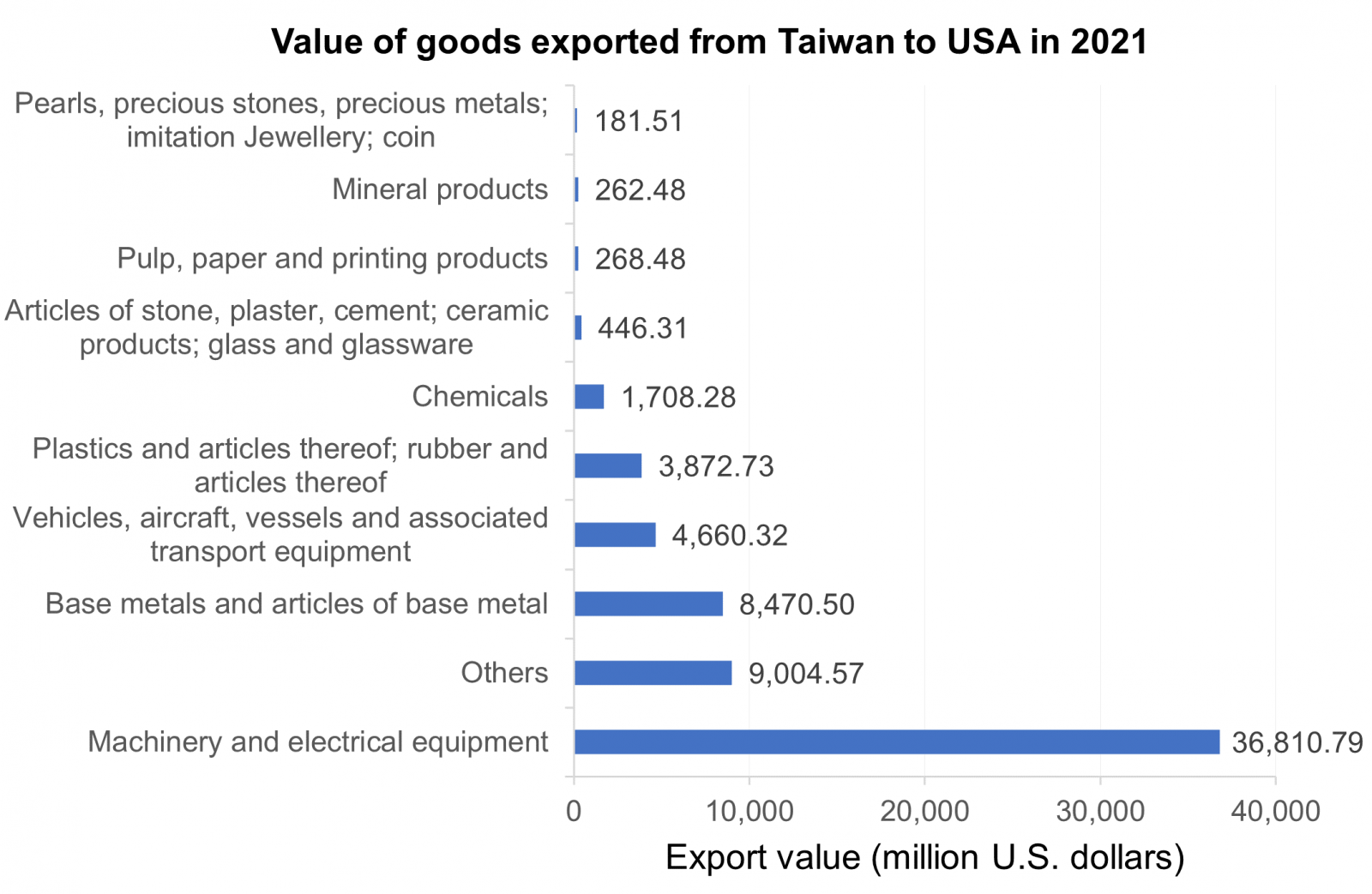
Figure 1: Major industry exports from Taiwanese to the U.S. in 2021 (source: www.statista.com)
If implemented, the CCA would impose costs on exports with high carbon footprints, potentially impacting Taiwan's major exports to the U.S. such as machinery, electrical equipment, base metals, and vehicles. These sectors, traditionally reliant on fossil fuels, contribute to high carbon emissions. To avoid these tariffs and remain competitive of products in the U.S. market, Taiwanese companies might have to invest heavily in renewable energy, efficient technologies or buy carbon credits to lower their emissions.
CONCLUSION
The proposed Clean Competition Act represents a pivotal move for the U.S. in tackling climate change, signaling a shift towards environmentally responsible manufacturing. By holding both domestic and foreign manufacturers accountable for the carbon footprint of their products, the CCA aims to reduce greenhouse gas emissions and ensure a fair market for U.S. industries. It stands to influence global trade dynamics, particularly for countries without carbon pricing systems like Taiwan, potentially compelling them to adopt cleaner technologies to maintain market access. This legislative initiative underscores the U.S. commitment to addressing climate change and encourages international cooperation towards a low-carbon future.
Visit Aquasky website: Aquasky Enterprise Corp., Pressure Tank, Pumplus, Pump Tank, Water Tank (aquaskyplus.com)